


Wash Rack Blues, Water Artical From The USGA
by LARRY W. GILHULY
Director, Western Region, USGA Green Section
Reprinted from the USGA Green Section Record
1993 January/February Vol 31(1): 9-10
DRIP, DRIP', DRIP? You have heard it thousands of times, at
thousands of locations. With the possible exception of the
air we breathe, no other compound in the world is more necessary
or valuable than water. Its components provide the very lifeblood
to virtually all living creatures. To golf courses, it is
the single most important part of a successful operation.
It also represents the greatest hazard!
The greatest what? How can such an important aspect of a golf
course be a hazard? It can if you are not paying attention
to a potential time bomb of environmental concern - the wash
rack area.
The Problem
During the past several years, the USGA has committed considerable
funding to answer questions concerning golf courses and the
environment. Do the pesticides we use pose a real threat?
Are nitrates from golf courses entering potable water sources
and causing problems. While answers will be derived from this
fundamental research, the one area that has received far less
attention is the maintenance facility. More specifically,
the area where mowers are cleaned and sprayers are washed
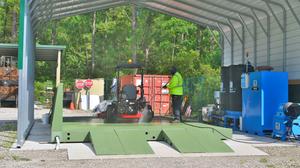
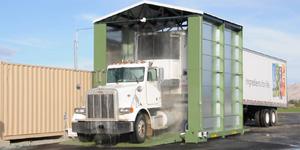
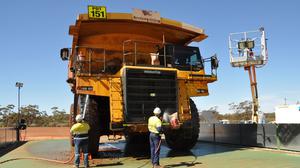
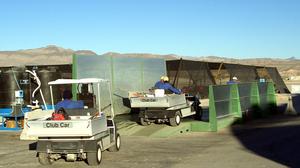
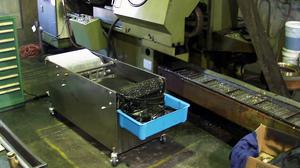
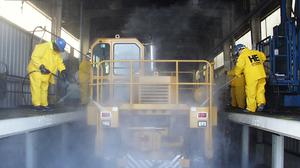
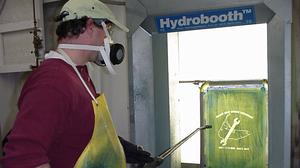
represents one of the greatest potentials for nutrient and
chemical escape into nearby streams or water sources. For a moment, consider the conditions of the wash area. Rarely is there turf to capture fertilizer washed from spreaders. There is no thatch to immobilize residues from sprayers. Often there is nothing to catch the clippings washed from mowers. In short, if you currently have a wash area that allows water to flow freely into a waterway or simply "disappear" into the soil, you are facing a potential problem. With this situation in mind, consider the following types of wash areas.