 HBD-C, Algae Control Treatment For Fish
and Decorative Ponds
The Problem
There is a clear need for
a safe, effective means to reduce or eliminate organic waste build-up,
toxic ammonia concentrations, and algae blooms in both commercial
aquaculture, aquariums, decorative fountains and pond situations.
In addition, although a
variety of water filtration systems are currently available, all
biological systems, regardless of the particular design, require
frequent maintenance and upgrading in order for them to work efficiently.
An inefficient filtration system is a serious problem for all aquaculture
situations since the filtration system can actually increase the
amount of available nutrient and organic matter in the system, thereby
compounding an already serious problem.

Algae problems can be solved
with Biodigesters
The Solution
HBD-C has been specially
designed to inhibit algae growth by removing its food sources. Hydro
Biodigesters (affectionately referred to as “bugs”) are a combination
of all natural bacteria, lab grade purified enzymes with micro and
macronutrients. HBD-C bacteria and enzymes are targeted to the food
sources available in pond water. Hydro-Biodigesters can successfully
attack, degrade, and liquefy fecal mass, undigested food, and other
organics that contribute to a build-up of ammonia and bottom solids.
Hydro-Biodigesters condition the marine environment ecology, close
to natures own.
Biodigesters will colonize
the tank/pond, multiply by a factor up to 1,000 times within a few
hours, take away the nutrients that encourage algae (thus eliminating
unsightly growth on walls and surfaces), and liberate carbon dioxide
for oxygenating plants.
Hydro-Biodigester microbes
are reliable scavengers that thrive on organic mass (waste). As
supplied they are in suspended animation (micro-encapsulated) but
are revived when added to the tank / pond water. Shortly thereafter,
they begin to digest excreta, excess food, oxidize ammonia, reduce
nitrites, nitrates, and other N-Compounds and reduce odors.
Aquatic ponds and tanks
frequently become plagued with; algae in many forms, fish excrement,
ammonia, nitrates and nitrites and poor water clarity from organic
matter. By out competing the natural occurring bacteria for the
available food sources, algae and odor causing bacteria die off
and thus the objectionable smell is eliminated. In addition it consumes
pond waste; bottom solids, fish excrement, organic and plant matter
while eliminating odors.
Hydro-Biodigesters proprietary
blend of all natural bio-cultures and enzymes have been selected
for their ability to effectively digest/degrade extremely heavy
concentrations of organic mass within an aquatic system. Reducing
those hostile factors that have been determined to be detrimental
to the health and life cycle of both fin and shell fish.


Myths In Nature
Some products utilize bacterial
strains such as nitric-ammonias and nitrobacterium found naturally
in pond water. These bacterial species break down ammonia into nitrate
and then into nitrite, it then leaves the water in the form of a
gas. These strains are not particularly effective in ponds due to
their pH sensitive nature. A pH of less than 6.7 or more than 7.4
will kill them. They are highly ineffective against algae.
HBD-C Takes Another
Pathway
HBD-C targets phosphorus
and nitrogen that promote algae growth while utilizing ammonia,
nitrates and nitrites as additional food sources. Our de-nitrification
process is much faster and more effective. Rather than step breakdown
from ammonia into nitrate and then into nitrite, all are consumed
simultaneously by HBD-C. This promotes an overall reduction of ammonia
compounds.
HBD-C vs Chemicals
Although a variety of chemicals
are currently available to reduce algae blooms, the algaecides themselves
are often highly toxic to aquatic life including fish. Many of these
chemicals are not environmentally safe to use. Unlike chemical treatments
that interrupt naturally occurring aquatic growth and organic decomposition,
Hydro Biodigesters are living organisms and enzymes that are specially
designed to quickly break down and metabolize pond wastes into carbon
dioxide and water. HBD-C is 100% safe for fish, plants, animals
and humans.
Addition Benefits
Of HBD-C
1. Eliminate odors by digesting the organic bottom solids and the
naturally occurring bacteria that produce odors.
2. Decrease oxygen requirements for oxidation of organic matter
within the water column, thus increasing available oxygen for fish.
3. Reduce bottom solids by converting organic matter to carbon dioxide
and water.
4. Eliminates pond scum by digesting algae’s primary food source
(nitrogen and phosphorus). As the algae dies from lack of food it
is digested by the Biodigesters.
5. Improves water clarity and quality by digesting suspended organics
within the water column.
6. Biodigesters, which can potentially extend the life of a filtration
system, which means lower maintenance costs and more effective optimization
of water conditions.
How We Do It
Hydro-Biodigesters are so
prolific they multiply (doubling the cell count) every 15-20 minutes.
If you start out with one cell in fifteen minutes you have two and
so on. In 8 hours you will have 17-million and in twenty-four hours
you have a 1 with one hundred and twenty six zeros behind it. They
simply out number the bacteria present in the system.
The Selection Process
There are over 3,000 known
bacterial strains. Our bacteria and enzymes are selected for their
ability to aggressively breakdown the targeted substrate. First,
we select only facultative strains that can operate in aerobic (with
oxygen) or anaerobic (oxygen depleted) situations. Our bacteria
are most effective in an aerobic state working 5-7 times faster.
We also take into consideration other factors like resistance to;
high and low pH, chemical shock and temperature. HBD can tolerate
a Ph of 4.5 to 9.5 without dieing off, but, the closer to a neutral
pH of 7 the better. They are resistant to disinfectants like chlorine,
up to 150 PPM and remain active in temperature ranges of 50-140
degrees F.
Proven Applications
Include
Lakes and Ponds
Aquariums
Decorative Fountains
Cooling Towers
Water Gardens
Fish and Shrimp Farms
Safe To Use
No Permits or Licenses are
required because HBD-C is not an algaecide. The bacteria only attack
dead organic matter. Therefore, it does not fall under FIFRA review
and does not require a permit and licenses to apply. All Hydro-Biodigester
products are guaranteed pathogen free; every batch is checked for
purity. Our bacterial strains are Not Genetically Engineered
, they are all naturally occurring strains.
Dry and Liquid Formulas
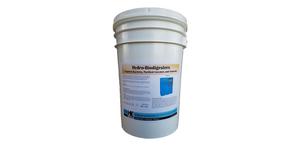
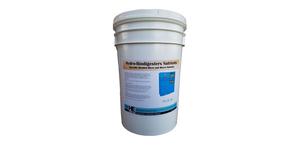
HBD is supplied in two forms,
liquid and dry. The patented process used to microencapsulate our
product protects it from activation in its dry form. We guaranty
an active cell count of 2.7 trillion cells per lb. for two years.
Once stabilized in a liquid that does not break the micro encapsulation
process HBD-C remains 100% viable with a cell count of 450 billion
per gallon for one full year.
Application and Dosing
Rates
HBD Dry formula is used
for seed dosing (initial propagation) and maintenance on large ponds
(lakes).
Seed Dose:
1 Tbs. per 1,000 gallons
1 lb. per 50,000 gallons
6 lbs. per acre ft. of water (325,000 gallons)
You simply mix the product
into warm (not hot) water and evenly introduce it around the waters
edge.
Maintenance Dose:
½ tsp. per 1,000 gallons
5 Tbs. per 50,000 gallons
1 lb. per acre ft. of water (325.000 gallons)
Maintenance doses should
be applied every week until algae stops forming and then every ten
days to two weeks.
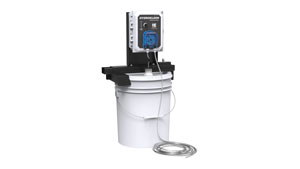
HBD Liquid can be automatically
dosed into the smaller bodies of water with our unique Hydro-Ultra
Dose system. For every one minute of run time the auto-doser adds
3 oz. to the system. Consult us for dosage rates. Liquid HBD can
be purchased in 6, 15, 30 and 55 gallon drums.
Commonly Asked Questions
1. Will Biodigesters harm
my grass if the treated water is used for irrigation?
No. Unlike chemical algaecides
Biodigesters specialized bacteria and enzyme won’t harm grass areas.
Biodigesters actually benefits your grass by increasing the beneficial
soil bacteria population.
2. What causes algae blooms
and how do Biodigesters help?
Algae are mainly caused
by excess nutrients in the water. Most ponds and lakes become overloaded
with nutrients; nitrogen, phosphorus, and organic compounds. These
excess nutrients overcome the pond’s ability to naturally clean
itself up. This upset of natures balance creates an environment
for algae growth. Biodigester microorganisms metabolize these excess
nutrients and basically out compete the algae for the available
nutrient food source.
3. What effect do Biodigesters
have on Phosphorus?
Phosphorous, or more properly
put excess phosphorus, has been identified as the single most important
factor in the rapid growth of algae and aquatic weeds. Microorganisms,
or bacteria are very simple organisms, which have two basic functions:
to metabolize (eat) and reproduce. Bacteria require phosphorus for
their necessary life cycles. The HBD-C bacteria utilize phosphorus
as a nutrient building block and the enzymes act as a biological
catalyst. Phosphorus is a key component in the make-up of DNA and
RNA (the “building blocks of life”), which are necessary for bacterial
cell replication.
4. How does Hydro-Biodigesters
deal with Nitrogen?
Molecular Nitrogen exists
in gaseous form and makes up roughly 80% of the earth’s atmosphere.
In the water, nitrogen is found in several forms: ammonia, nitrites,
and nitrates. Through a process known as nitrification and de-nitrification,
the Biodigester formula will break the complex forms of nitrogen
down into molecular nitrogen, which is a gaseous form. This nitrogen
will be degassed through the water, escaping to the surface and
leaving the aquatic environment.
5. How do the Biodigesters
deal with Carbon?
The microorganisms digest
carbon through the process of breaking down organic matter. The
carbon is absorbed through the bacteria’s cell membrane where it
combines with “O” oxygen and is released as CO2. Biodigesters enzymes
break down the complex carbon bonds making these materials easier
to digest for the bacteria. This break down of organics leads to
a reduction in total suspended solids and bottom solids.
6. How do Biodigesters remove
odors?
Most pond odors are caused
by hydrogen sulfide (rotten egg smell), sulfur, and ammonia. Biodigester
bacteria are selected for their ability to out compete the bacteria
which produce hydrogen sulfide thereby eliminating odors.
7. Will Hydro-Biodigesters
help remove pond bottom sludge?
Biodigesters bacteria/enzyme
formulation is designed to supply bacteria and enzymes which work
on nutrient sources throughout the complete water column, including
the pond bottom. Our product includes two strains of non-hydrogen
sulfide producing bacteria specifically targeted for bottom solid
digestion.
8. What do Biodigesters
do to improve water clarity?
Our product can make dramatic
improvements in clarity. When clarity is affected by floating organic
matter, Biodigesters will be highly effective in a matter of 1 to
2 weeks. The bacteria break down of carbon leads to a reduction
in total suspended solids, which is evidenced by improved clarity.
9. Are there ponds or lakes
where the product should not be used?
Any pond or lake which loses 45% or more of it’s liquid volume in
any given day should not be considered for Biodigesters due to the
high turnover rate.
10. Will Biodigesters clear
my pond of existing algae?
Biodigesters are best used
as a preventative, ongoing management tool. It is best to use our
product before the problems occur. Biodigesters can be effective
once the pond has experienced an algae bloom, however, it can take
several weeks before a significant impact is noticed.
11. What about aeration?
Biodigesters and all other
bacterial products, for that matter, depend upon adequate amounts
of dissolved oxygen in the water. Biodigesters decomposition rates
are 5-6 times faster in the presence of oxygen. This means that
water, with aeration will experience a higher and faster success
rate.
12. Are Biodigesters safe
to use?
Biodigesters bacteria/enzyme
strains are indigenous, non-pathogenic, naturally occurring bacteria.
They are completely safe and FDA GRAS listed as safe for humans,
animals, and plant life.
13. Do Biodigesters require
EPA registration?
No, because our product
contains only naturally occurring, non-pathogenic, indigenous microorganisms.
14. What is the shelf life
of Biodigesters?
The shelf life is two years
in dry form and one year in liquid form. When the seal on the container
is opened, it must be re-closed and stored in an area of low humidity,
out of direct sunlight.
What can be expecedt
after application?
2 to 4 days there will be
a reduction in nitrogen and phosphorus levels.
3 to 4 days there will be a reduction in odors.
Two weeks there should be a visible improvement in clarity and water
quality.
Special Notes
For the best performance
of Biodigesters, drain and clean ponds, fountains, stock water tanks,
and aquaria prior to treating. This makes it easier and faster for
the microorganisms to establish control of your system.
Packaging is in 3.5 &
16 OZ Jars and 20 lb. kegs. (Liquid by quote only)
|